Showing posts with label BooksRead. Show all posts

Thursday, 14 November 2019

Review of 'Flesh' by Dylan Morgan.


This is my second read by this author.

Story telling is an art.  Dylan Morgan combines essential ingredients to keep his reader hungry for more.  There is undoubtedly a good deal of brilliantly worked traditional graphic horror, but there are also characters to side with and characters to side against, providing true reader investment in the outcome of dynamic, tense drama.  I really have to care about what happens to a protagonist - otherwise, I lose interest.

If I had to comment on one outstanding feature of 'Flesh' it would be the author's particular style of writing.  He uses language in a distinctive way to drive the story forward and enliven characters.  Thoughts tumble into Keller's mind; goosebumps pop; monsters slither and shadows seep

It's good, creative stuff.  More please!

Thursday, 25 October 2018

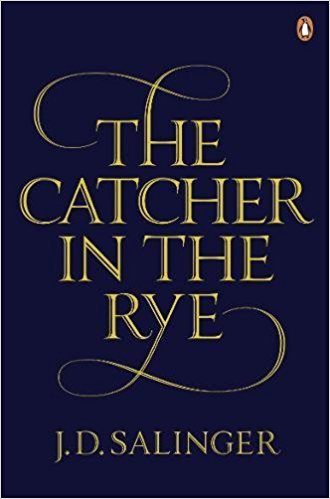
I Get It


Reading through some of the one-star reviews of this book I was interested to note that a lot of people, twelve percent in fact, left comments like: 'ramblings of a teenage drunk', 'pile of rubbish', and my personal favourite: ' a blasphemy to the beauty of the English language'.  It was variously described as dull, tedious, repetitive, and lacking any kind of plot.  But the most frequent complaint was that it was disappointing.

When a book is described as a classic it's difficult not to expect something great.  Something that will perhaps change your perspective on the world.  If you read it, looking for this something and fail to find it, then, yes, it will surely disappoint.

It's happened to me and it's happened to you (I'm assuming).  We've all been disappointed by classic reads at some time or other.

The Catcher in the Rye is just one of those books.  You love it or hate it.  You find treasure or you don't.  You get it, or you don't get it.

This one, I got.

Now I have to say what it is that I 'got'.  To the best of my ability.  Which, I can tell you, is a daunting prospect.  It really is.

If you've read J D's classic, you'll notice the style of the last paragraph - a poor mimic, I'll admit.  But the style of writing is what first strikes the reader.  Here we have a seventeen-year-old boy telling us in 1950s teenage language, about his situation - he's at a prestigious boarding school, about to be kicked out after 'flunking' his exams.  And he's talking directly to us, first person, up close and personal.

I could describe the plot, but if you want an excellent summary you can visit Wikipedia.  I'd recommend it, especially after you've read the book, for all the snippets of peripheral information about the author.

What I want to say, to try to say, is why this book is one of my all-time best reads.

It's true that Holden Cauldfield (I love the strangeness of his name) is lazy, reactive, immature...but he is also hanging on to what he sees as 'real', what is not 'phony'.  His thoughts and interactions with other people are often superficial, his conversations repetitive, but mixed in amongst the simmering chaos of his life there are moments of astounding beauty.  It's like walking through a field of mud and finding something precious.  I don't mean something like a diamond or a wallet.  Rather consider coming across a baby bird, injured and near death.  Holden would pick it up, carry it away, make it well, if he could. 

Now, I've made the book sound soppy, but it's not.  True, it's nostalgic.  It takes you back.  Makes you remember feelings you had as a child growing up.  Holden Cauldfield reminds you that in a world of  fixed pathways through education, to a career and happiness, there are stop-offs along the way that blow any plan out of the water.  For him, it's where the duck go when the pond freezes over, the essay he wrote about his dead brother's baseball glove, the record he bought (and accidentally broke) for his sister Phoebe, or the trips to the Museum of Natural History when he was younger (he notices small changes and wishes things had stayed exactly the same).  These moments stand out amongst the mud and daily grind to nowhere like a beating heart.

As he gravitates towards home and his beloved younger sister, Phoebe, he follows a young boy walking carelessly in the gutter along a busy street.  He feels the boy's parents are unaware of the danger he is in.  Then, the boy begins to sing:

"If a body catch a body coming through the rye,"

which strikes Holden with its simple joy.  It also leads him to formulate a plan - a plan based on his understanding of the above line, which is a misquote from Burn's poem.  Holden sees himself standing at the edge of a field of rye where children are playing and shouting near a cliff edge.  As they run and play, unaware of the danger, Holden will stand guard and catch them when they fall.

I must admit, as I came to the final pages I wondered how on earth there could be a satisfying ending to a book that covers a three-day period in the life of a moody teenager.  The final paragraph, for me, is genius.  See what you think.

Whether or not you get the punch to the stomach and the shock to brain from these moments of insight, of clarity and simplicity, is probably down to how you are wired.  I don't want to sound smug or superior - there's plenty I don't get about a whole plethora of things.  I just can't help being amazed by this particular book and grateful to J D for writing it.

Here's the link if you want to give it a try:  Catcher in the Rye


Thursday, 2 August 2018

Review: The Legacy of Beauregarde by Rosa Fedele


Five stars from me!


If you like authors such as Daphne du Maurier...you'll love The Legend of Beauregarde

I read The Red Door before being gifted an ARC copy of Rosa Fedele’s new novel, which, I must say, is well worth a read if you enjoy strong characters and an intriguing plot.  The style is on the literary side – which I love.  Skilled and imaginative use of language add an extra layer of delight in my opinion. 
The Legacy of Beauregarde is moody and, at times, sinister.  There are touches of the paranormal and shades of horror.  As you read, you feel as though you are sinking into the history of the place, its houses, and its characters (some of whom are not at all what they seem at first), wrap themselves around you.
It’s true that there is a lot to take in, and that you need a sharp mind to keep up, but some of my favourite books make me work hard in order to repay my efforts tenfold.  And why not?  That's the way a good book draws you in.
I must say also that the artwork scattered throughout the book, even in the ebook version, is captivating, and certainly helps to enhance the reader’s experience.
Would I read it again?  This is one of my personal yardsticks in judging the quality of a novel.  And the answer is yes!  In fact, I’m looking forward to it.

Monday, 8 June 2015

Review: Station Eleven by Emily St John Mandel


I should mention first of all that I bought Station Eleven after reading a review on one of my favourite blogs: https://misfortuneofknowing.wordpress.com/


It starts obliquely.  Nothing much happening apart from a middle-aged actor going through multiple mid-life crises and messing up his lines, before collapsing on stage.  Who would have guessed that it would turn out to be an end-of-the-world story? 

I would have said that I didn’t like post-apocalyptic as a genre.  But there is something more to Station Eleven than the gruesome demise of the human race, and I was delighted that Mandel didn’t go in for vicarious deathly detail.  Instead, she follows the survival of diverse groups of people who have made it through the epidemic and created various kinds of communities.  Some are more appealing than others.  All are leftfield and (in my opinion) perhaps a little esoteric. 

What really drew me in were Mandel’s observations.  A world without electricity, juxtaposed with the desire to flick a switch, just to bring back the memory of what it felt like to flood a room with light.  An obsession with travel and telecommunications -  in the new world there are children who have grown up not knowing about the miracle of the Internet, who gasp at the implausibility of rockets to the moon. 

And, there is ‘Station Eleven’ – Dr. Eleven and his psychedelic comic book story of a spaceship drifting in a parallel universe, its inspirational close-ups and bubble language building from the past and influencing the future in the most unpredictable of ways.  Its slogan and epitaph ‘survival is insufficient’ (borrowed from an episode of Startreck).

Like any good story, there are characters you care about.  Their hopes and aspirations cruelly shattered by the epidemic.  Mandel creates a retrospective poignancy with remembered lives set against a bleak future.  Many questions are raised about what it is that should be kept from the past and shared with the children growing up in the future.  The intimation that there will be a future is deeply consoling.

One of the most interesting reads so far this year.

Saturday, 2 May 2015

Review: The Thousand Autumns of Jacob de Zoet by David Mitchell.


I’ve read everything by this author (except The Bone Clocks, which is on my list), and so I knew that I would have to have my wits about me with this most ambitious work.  (I’m still trying to come to terms with all the intricacies of Cloud Atlas, a most epic piece of writing, which I have read twice and will probably read again at some point.)

The setting for The Thousand Autumns of Jacob de Zoet is Japan, which is a place Mitchell goes back to time and time again, having lived there with his Japanese wife before eventually settling in Ireland.  This time we are sailing into Nagasaki harbour to rendezvous at Dejima, a small trading post. We arrive on a Dutch ship at the end of the 18th century.  International trade between Japan and the rest of the world is limited. 

Our understated protagonist, Jacob de Zoet, is an honest man, a trader employed by the Dutch East India Company who is given the task of validating the accounts concerning the merchandising of goods in Dejima.  He soon finds himself amongst liars and thieves, eager to influence him in any way they can.  At first, de Zoet seems naïve, but he bides his time and does not stumble into the traps that are set for him. 

Love is a central theme, too.  Realism is the order of the day, but romance often bubbles up to inspire us.  Jacob talks about a girl he has left behind, and obsesses about a midwife he meets in Dejima during a hilarious set-to with a chimpanzee called William Pitt. 

The plot is intricate, the characters many and complex – far more than seems necessary at first.  But, please, persevere – it’s worth it!  Mitchell involves every level of society, with a Shakespearean eye for detail. The dialogue is ubiquitous and complicatedly Pinteresque, peppered with asides and minute observations that give an immediate sense of place or emotional insight. There is horror, murder, betrayal and double-dealing.  There is humour when you least expect it, often in the form of farce and, more often than not, involving William Pitt, who is there at the beginning and still around at the end of this epic adventure.

When I came to the final pages, I’ll admit that I thrilled at the idea of a momentous conclusion.  Time slowed as I devoured each word, not wanting my enjoyment to end, imagining scenarios that I suspected were too cliched for a Mitchell masterpiece.  What happens?  Ah, you wouldn’t want me to tell you, would you?  Suffice to say, if you love literary genius, you won’t be disappointed.


Thursday, 1 January 2015

Review: Queenie by Alice Munro

Amongst the books I received at Christmas was a  tiny sixty-page short story entitled ‘Queenie’, by an author I’d never heard of: Alice Munro, now eighty-three years old and winner of the Nobel Prize for Literature.  As a writer of short stories myself, I was curious to find out how this author could have earned the most prestigious of prizes for such an underrated art form.

I was excited.  Expecting miracles.  I was not to be disappointed.

It’s a slow burn, which is what I like.  Introductions are succinct and slick.  No information overload here. 

Queenie (real name, Lena) and Chrissy (the narrator) are half sisters, who leave their family home and follow very different paths. Their story is unremarkable, but that’s not what we’re digging for, as we read.  We sift through Chrissy’s observations of the beautiful but tragic Queenie.  We look for treasure, as she reveals little by little the faults in her sister’s marriage and hints at a possible alternative future. We hold our breath as, through Chrissy’s eyes, we take in the weight of a new perspective on someone she thought she knew, who suddenly seems strange to her.  There is little of substance in the plot.  But that is the point.  This is no quick fix.  The seeds are scattered and take time to grow.

What comes to the fore as we assess the girls’ individual predicaments, is the realisation that, with the passing of time, something precious, something familiar, is left behind.  Not just for Chrissy, but for all of us.  ‘Queenie’ captures and delivers an exquisite and ultimately overwhelming synthesis of those moments in life that pass us by and which are largely taken for granted, only coming back to haunt us later, arriving like shock waves, unsummoned and bewildering, as we perform our routine tasks, dumbed down and comfortable, as it were, in the microcosm of our present existence.  A word, a phrase, a smile, the tilt of a head takes us away, then leaves us bereft, wanting to find a way back but not knowing how to get there.

This wonderful story reminds us that, at a certain point, we no longer look to the future hoping for excitement or novelty as often as we look into the past for comfort and reassurance, or, if we are honest, with regret.  Alice Munro’s ‘Queenie’ once read, ripples through our minds, reminding us of those times, gone forever, that mean the world to us. 

Quite simply a masterpiece. 

Saturday, 27 December 2014

Review: The Secret History by Donna Tartt

American college students doing drugs, studying Greek and committing murder.  Donna Tartt lures us into a world where the normal limits of college life disappear and something closer to supernatural anarchy takes over.  There are half-revealed scenes of ritual horror, betrayals of trust, free love for some, tantalising frustrations for others. 

The narrator, Richard Pappin, endures the agony and the ecstasy of becoming a member of an elite Greek class at Hampden College, Vermont, led by Julian Morrow, a brilliant and enigmatic professor, who remains mostly in the shadows and, despite his almost incestuous attachment to his exceptionally gifted students, is only partially aware of their extra curricular obsessions.

Richard is granted entry to this elite group and begins to find out how Bunny, Francis, Henry, Camilla and Charles tick, although there is always the notion that secrets are being withheld from him.  We, too feel that we are honorary members of the group, only permitted to look through the blinds, as it were.  The result of such a fragmented view is that, in addition to constantly having to second guess what will happen (which we expect to do in any good mystery), we find ourselves fretting, worrying what these dysfunctional characters will do next to sink themselves more deeply in the mire. At times, it is almost like reading something by Enid Blyton.  'The Secret Seven', grown up and with pathological tendencies.  Friendship has never been quite so stressful, or downright dangerous.

I did enjoy this book immensely, but there was something so destructive woven into the fabric of the writing, that when I got to the final page and saw the full-page photograph of the author, I actually shuddered.  Here was Henry, just as I had imagined him, but in female form. 

Highly recommended for readers who enjoy a seriously disturbing murder mystery with more than a pinch of pure madness.

Sunday, 14 December 2014

Review: 'A Thousand Splendid Suns'


Khaled Hosseini  (‘The Kite Runner’) is a best-selling Afghan-American author.

They say that you should write about what you know.

Khaled Hosseini certainly has me believing in a world that is both horrifying and exquisite.  There is human suffering on an unimaginable scale, tempered by compassion, and friendships forged in the most hostile environments.  Characters are beautifully drawn, so that we walk in their footsteps, travelling with them along paths that offer hope in the midst of war and oppression.  Mariam and Laila, women of their time, are skilfully brought together, their sufferings shared and made tolerable by a mutual empathy that allows these women to bear with integrity and stoicism the lives they have had no part in choosing. 

We learn about an Afghanistan wracked with brutal traditions, aggressive regimes and a divided people, not through dry documentary, but via the experiences of the characters we have come to care deeply about.  We are shown the vastness of the land, its ancient monuments and close communities, its mountains and deserts.  Khaled Hosseini is a true master of the written word and, as we find out in the author’s final notes at the end of the book, a man of principle, who takes an active interest in the future of his country.

Highly recommended.  


Click here to view Bev Spicer's books (UK)

Click here to view Bev Spicer's books (US)


Friday, 5 December 2014

A Spy in the House of Love


Anais Nin


I read this when I was young enough to believe that I could, if I wished, ‘be’ Sabina.  I had already devoured most of D H Lawrence’s novels and been impressed, as only a pretentious undergraduate can be, with this (or any) kind of angst-ridden literature, so I was ready for more and was inclined to believe that Anais Nin would go deeper in, as it were, and stay there for longer.

A third of a century later, I downloaded the English version to my kindle and plunged in once again.  What I found was a predictable minefield of emotion, a philosophy that had more twists and turns than an anaconda and, in between, passages that struck home with one or several blinding truths that went off like fireworks in my brain.  More!  I wanted more.  It was like sifting through sand to find diamonds, laborious but ultimately worth the effort. 

Nin is a master at proving the point that, as The Verve later put it, rather more succinctly, in Bittersweet Symphony: (we are) ‘a million different people from one day to the next…’  Sabina wrangles with her multiple personalities and endeavours to satisfy each one, all the time searching for the elusive real ‘Sabina’.

I will undoubtedly return to this book, but I will try it in French next time. The English version was chosen for its lower price tag (shameful) and in the vain hope that it might be easier to read (genetic flaw).  I have to say that it is not a bad effort, (I believe that Nin was criticised greatly for her English*) but there is an unavoidable awkwardness that jars the flow and this book needs, above all, to flow.  There were too many ‘annihilations’ ‘dispersions’ ‘fragments’ and every part of speech involving the base form ‘bleak’ (this last one must have been when even the author had had enough of Sabina’s inner turmoil and her long-way-round trip to find herself).

A richer, more natural lexical field would at least have avoided choices that are almost but not quite apt, not to mention the tedious repetition of standby, last resort words as mentioned above.  ‘Lostness’ was probably the last straw for me.

However, until I get to grips with the French edition once more, which may read better, I feel a bit of a fraud.  Even in English, the book is definitely well worth reading.

* I believe that Nin wrote in both English and French and that her books are not translations.


Thursday, 25 September 2014

My latest read: Crash by J G Ballard


J G certainly divides the camp with 'Crash'.  Released in 1973, the reviews were uncompromising: ‘Crash is, hands down, the most repulsive book I’ve yet to come across.’ New York Times, Sept. 1973 (the ambiguity of the phrasal verb is almost unbearable).  Martin Amis, Observer, July 1973 wrote: ‘Ballard has a brilliant reputation but this novel’s obsession with sado-masochism via deliberate car-crashing is repellent.’ 

Ballard himself says in his introduction: ‘...the ultimate role of Crash is cautionary, a warning against that brutal, erotic and overlit realm that beckons more and more persuasively to us from the margins of the technological landscapes.’  That got me.

I read on and discovered that Crash is undoubtedly explicitly pornographic, but there have been many novels that have crossed boundaries and appalled (or delighted) readers in the past.  Crash gets into a territory that is so new that I had to keep reading despite the natural revulsion I felt for some of the most deviant imagery I have ever experienced.  The intimate and devastating bringing together of automobile parts and human anatomy, where gauges and gear sticks leave scars that inspire the ‘nightmare angel of the expressways’, Dr. Robert Vaughan  to perform sex acts recreated from accidents he has witnessed had me squirming and yet...

...I went along with it, in some reassuring way, holding the hand of the narrator, who, although enjoying the kind of sexual freedoms that inhabit the most creative of imaginations, seemed at the same time, recognisably human - he cared about his wife, his friends, but, like me, was intrigued and wanted to know more about the decadent and highly charismatic Vaughn’s nightmare obsessions with the motor car and those injured or killed in crashes happening almost on a daily basis on the highway.

The thesis is extreme: that we are living on the edge of a cataclysmic event in which we will all be consumed.  Technology, and the dreams it ensnares us with, will destroy us.  In the process, it will continue to de-humanise us.

The impacts between metal, glass and upholstery and the human body seemed to blur the differences between what is animate and inanimate, but more than that, I felt that there was an element of sacrificial inevitability.  The many human fluids mentioned that appeared to decorate and mingle with the excretions of the motor car did not detract from this.

Crash caught me up and carried me into a startlingly new domain, which both horrified and fascinated me.  At no point did I doubt the wider aims of the author, who asserts that Crash ‘is an extreme metaphor for an extreme situation, a kit of desperate measures only for use in an extreme crisis.’  Elsewhere he states that Crash is a ‘psychopathic hymn which has a point.’

The descriptions are unswervingly detailed, the images deeply disturbing, the repetition of death and injury on the highways and flyovers relentless.  It’s worse than any bad dream you could imagine.

Am I glad I read it?  You bet.